It rises from the Arabian Gulf not just as a building, but as a statement. The sail-like silhouette of the Burj Al Arab Jumeirah is as synonymous with Dubai as the Eiffel Tower is with Paris. But beyond the glitter, what is the real story of this architectural marvel? How did it go from a daring sketch on a napkin to the global icon of luxury?
As a luxury travel expert who has watched Dubai’s skyline transform for over two decades, I can tell you that understanding the Burj Al Arab is key to understanding the city’s ambition. This isn’t just a hotel; it’s a testament to a vision that aimed to “put Dubai on the map.”
This guide is for the discerning traveler, the architecture enthusiast, and the luxury seeker. We will go beyond the “7-star” nickname and delve into the how and why of its design, and—most importantly—how you can experience it for yourself.
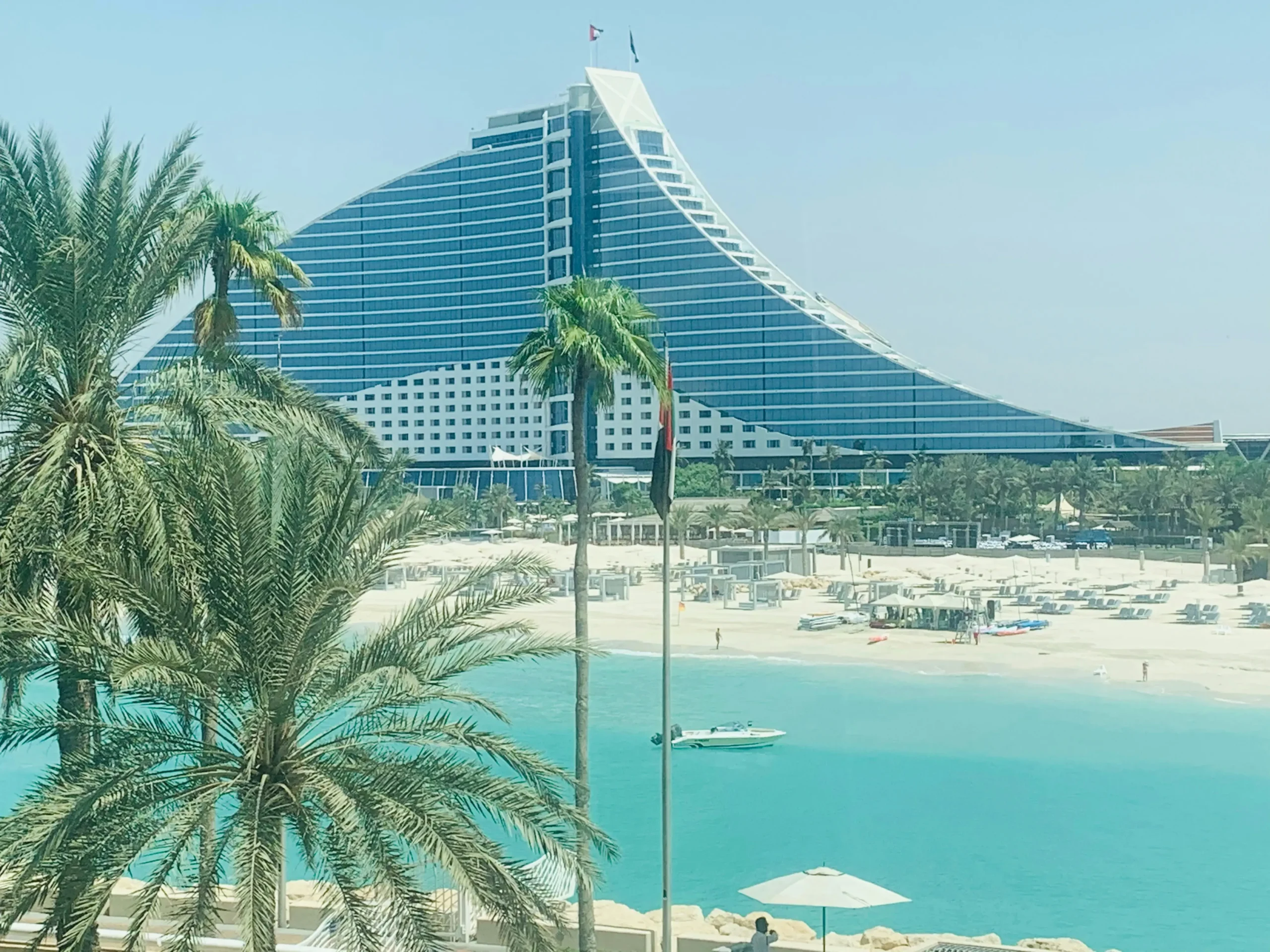
The “7-Star” Myth: Unveiling the Real Story
First, let’s address the elephant in the room: the “7-star” rating. Officially, it doesn’t exist. This famous moniker was reportedly coined by a British journalist during a pre-launch press tour, who was so astounded by the sheer opulence that she declared five stars simply weren’t enough.
The hotel group, Jumeirah, has never used this term itself. What the Burj Al Arab is, however, is the absolute pinnacle of the official 5-star luxury classification. It operates on a level of personalized service and architectural grandeur that created its own category.
The Vision: A Daring Feat of Engineering
The story begins in the 1990s with a brief from His Highness Sheikh Mohammed bin Rashid Al Maktoum, Vice President and Prime Minister of the UAE and Ruler of Dubai. The vision was simple but monumental: create a building that would become an undisputed icon for Dubai.
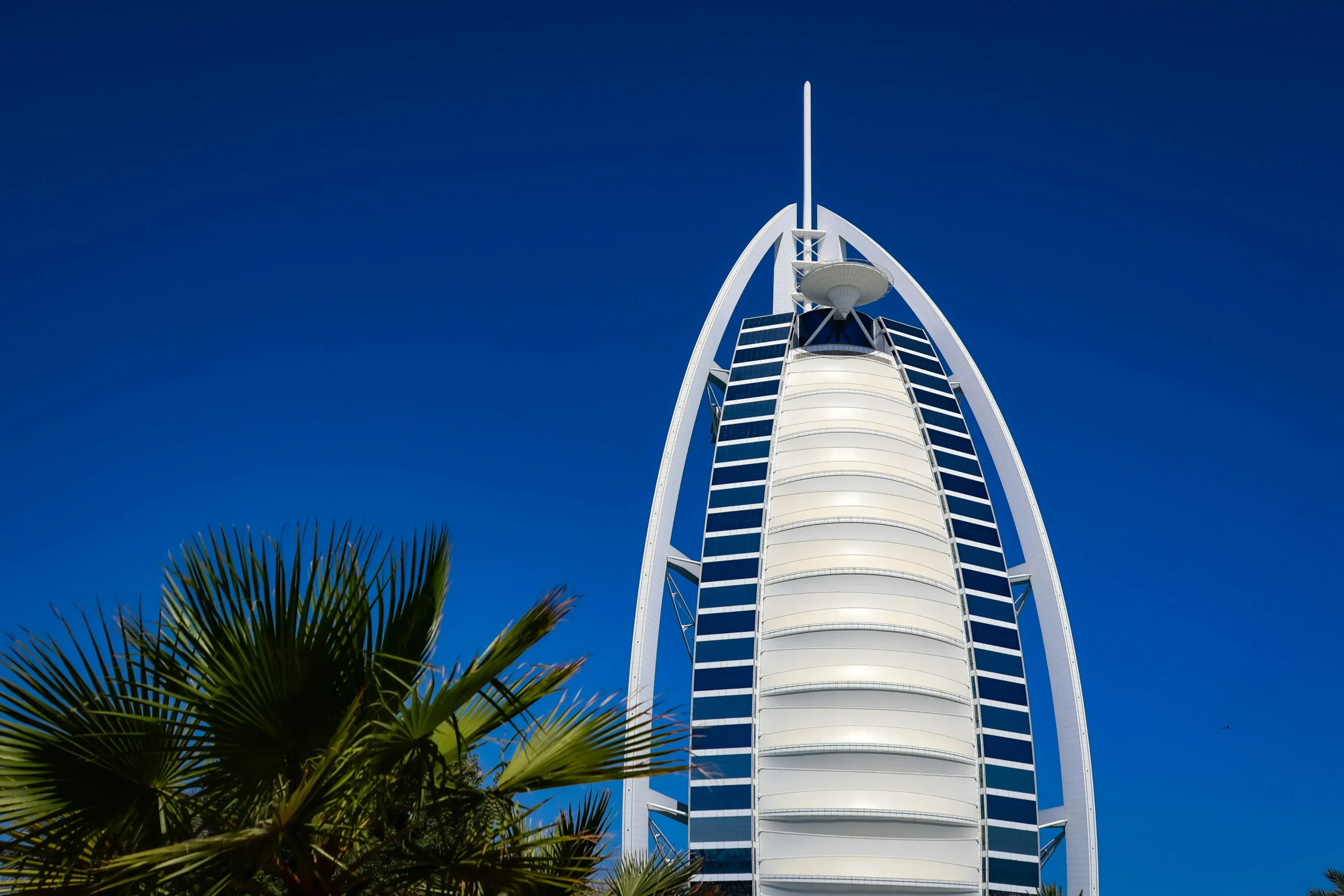
The commission went to British architect Tom Wright of W.S. Atkins. His design, famously sketched on a napkin, was inspired by the billowing sail of a traditional Arabian dhow (a wooden sailing vessel). This was a perfect metaphor—a nod to Dubai’s maritime heritage while sailing confidently into its high-tech future.
But how do you build a 321-meter-tall (1,053 ft) “sail” in the middle of the sea?
How Was the Burj Al Arab Built? The Man-Made Island
The first challenge wasn’t the height; it was the foundation. The hotel stands on a man-made island 280 meters (920 ft) offshore. This was an engineering-first.
To secure the island, the team had to create a stable base, not on bedrock, but on sand. The solution? They drilled 230 concrete friction piles (each 40 meters long) deep into the seabed. The sheer friction of the sand against these piles is what holds the entire structure in place. This artificial island, protected by specially designed “shed” concrete blocks to absorb wave impact, took three years to build—before the hotel’s construction even began.
A Guide to the Architecture: The Sail and The Exoskeleton
The Burj Al Arab is a marvel of “form follows function,” with every design choice serving a purpose.
- The “Sail” (Façade): The building’s iconic curve is not just for show. It’s a double-skinned, Teflon-coated woven fiberglass screen. This brilliant material is the first of its kind used on this scale. It diffuses the harsh desert sun, bathing the interior in a soft, milky-white light during the day. At night, it becomes a giant canvas for spectacular light shows.
- The “Mast” (Exoskeleton): The hotel is supported by a massive external steel frame, or “exoskeleton.” These two “arms” stretch up from the base, meeting in a V-shape at the top. This design is crucial, as it bears the structural load, allowing for the creation of the record-breaking atrium inside.
Your Guide to the Opulent Interior: A World of Gold and Color
If the exterior is a minimalist masterpiece of white and blue, the interior is its exact opposite. Designed by Khuan Chew, the interior is a jaw-dropping explosion of color and texture.
The design is based on the four elements: water, fire, earth, and air.
- The Atrium: The moment you step inside, you are in the world’s tallest hotel atrium, soaring 180 meters (590 ft) high. To put that in perspective, it could comfortably house the Statue of Liberty. The design uses a “symphony” of color, with tiers of balconies in vibrant blues and greens, all set against the backdrop of 1,790 square meters of 24-carat gold leaf.
- The Suites: The Burj Al Arab is an all-suite hotel, and even the “smallest” is a 170-square-meter (1,830 sq ft) duplex. Each of the 202 suites spans two floors, complete with a grand staircase, private butler, and floor-to-ceiling windows offering views of the gulf.
- Opulent Details: The hotel’s commitment to luxury is legendary. This includes everything from rare Statuario marble (the same type Michelangelo used) to the ultra-exclusive eiderdown duvets, sourced from abandoned eider duck nests in Iceland.
How to Experience the Architecture First-Hand (A Practical Guide)
As a travel expert, this is the question I’m asked most: “Can I just go in and look around?” The answer is a polite no. The Burj Al Arab maintains its exclusivity through a strict reservation-only policy.
But don’t worry. Here are the three best ways to get inside and see the architecture for yourself.
1. The “Inside Burj Al Arab” Tour (The Best-Value Option)
This is a fantastic development in recent years. The hotel now offers a 90-minute guided “Inside Burj Al Arab” tour.
- What You See: The tour takes you through the famous atrium, gives you a detailed look at the opulent Royal Suite (a replica, but just as stunning), and provides countless photo opportunities.
- Price: It typically starts from 249 AED (approx. $68 USD) per person.
- My Expert Tip: Book the sunset tour. You get to see the atrium in the golden hour, and the experience often includes a drink at the exclusive outdoor terrace, UMA.
2. Book a Dining Reservation (The Classic Way)
For decades, this was the only way for non-guests to enter. By booking a table at one of its signature restaurants, your name is put on the guest list, allowing you access across the private bridge.
- Al Muntaha (“The Ultimate”): Located 200 meters up on the 27th floor, this restaurant offers breathtaking views of Dubai and the Palm Jumeirah. It’s ideal for a fine-dining lunch or dinner.
- Al Mahara (“The Oyster Shell”): This is the famous “underwater” restaurant. While not truly underwater, it’s built around a massive, floor-to-ceiling aquarium, making for an unforgettable dining experience.
- Price Guide: This is a true luxury experience. Expect a significant minimum spend per person, often starting from 350-500 AED ($95-$136 USD) just for afternoon tea at Sahn Eddar, and much more for dinner.
3. The Ultimate Experience: Stay the Night
If your budget allows, there is no substitute for checking in.
- What You Get: This is the only way to get full, unrestricted access. You can use the stunning Burj Al Arab Terrace (a private 10,000-square-meter deck with two pools, cabanas, and a restaurant jutting out into the sea), access the Talise Spa, and, of course, experience the legendary 24/7 private butler service.
- Price: A night in the Deluxe One-Bedroom Suite (the “base” category) typically starts from $2,000 to $2,500 USD, depending on the season.
The Verdict: Is Visiting the Burj Al Arab Worth It?
As someone who has guided many travelers through Dubai’s luxury landscape, my answer is an emphatic yes.
Whether you take the architectural tour, indulge in a sky-high afternoon tea, or go all-in for an overnight stay, you are not just visiting a hotel. You are experiencing a living piece of history. The Burj Al Arab is the physical manifestation of Dubai’s audacity and its unwavering belief that if you can dream it, you can build it.
Frequently Asked Questions (FAQ)
- Q: Who was the architect of the Burj Al Arab?
- A: The lead architect was Tom Wright of W.S. Atkins, who famously designed the “sail” shape inspired by a traditional Arabian dhow. The opulent interior was designed by Khuan Chew.
- Q: How much did the Burj Al Arab cost to build?
- A: While the exact, official figure is not public, it is widely estimated to have cost over $1 billion USD to build, making it one of the most expensive hotels ever constructed at the time.
- Q: Can you visit the Burj Al Arab for free?
- A: No. Access to the private island and the hotel lobby is strictly reserved for guests with a hotel, tour, or restaurant reservation. You cannot walk in to just look around.
- Q: What is the dress code for the Burj Al Arab?
- A: The dress code is “smart casual” or “elegant.” For men, this means collared shirts, smart trousers (no shorts), and closed shoes. For women, elegant dresses, skirts, or smart trousers are appropriate. Beachwear is not permitted in the public areas or restaurants.
- Q: Is the Burj Al Arab Terrace access free for guests?
- A: Yes, if you are an overnight guest of the Burj Al Arab Jumeirah, you have complimentary and exclusive access to The Terrace, with its two swimming pools, restaurant, and private cabanas.
